
Taiwan Construction Disputes (Part 3): Fixed-Term or Indefinite? Specific Work and the Blind Spot Between International Contractors and Local HR Consultants
Author: Jenny Liao
This is the third article in our team’s series on Taiwan Construction Disputes. The first two articles approached contractor-versus-owner disputes over “more time” and “more money” from two angles: the overall framework and the doctrine of change of circumstances. This article turns the lens to a different, often overlooked, but equally important area beneath the contractor’s own feet: the hiring and termination of local workers. In the world of large construction projects, this is not merely an HR issue. It can directly affect the financial outcome of the project as a whole.
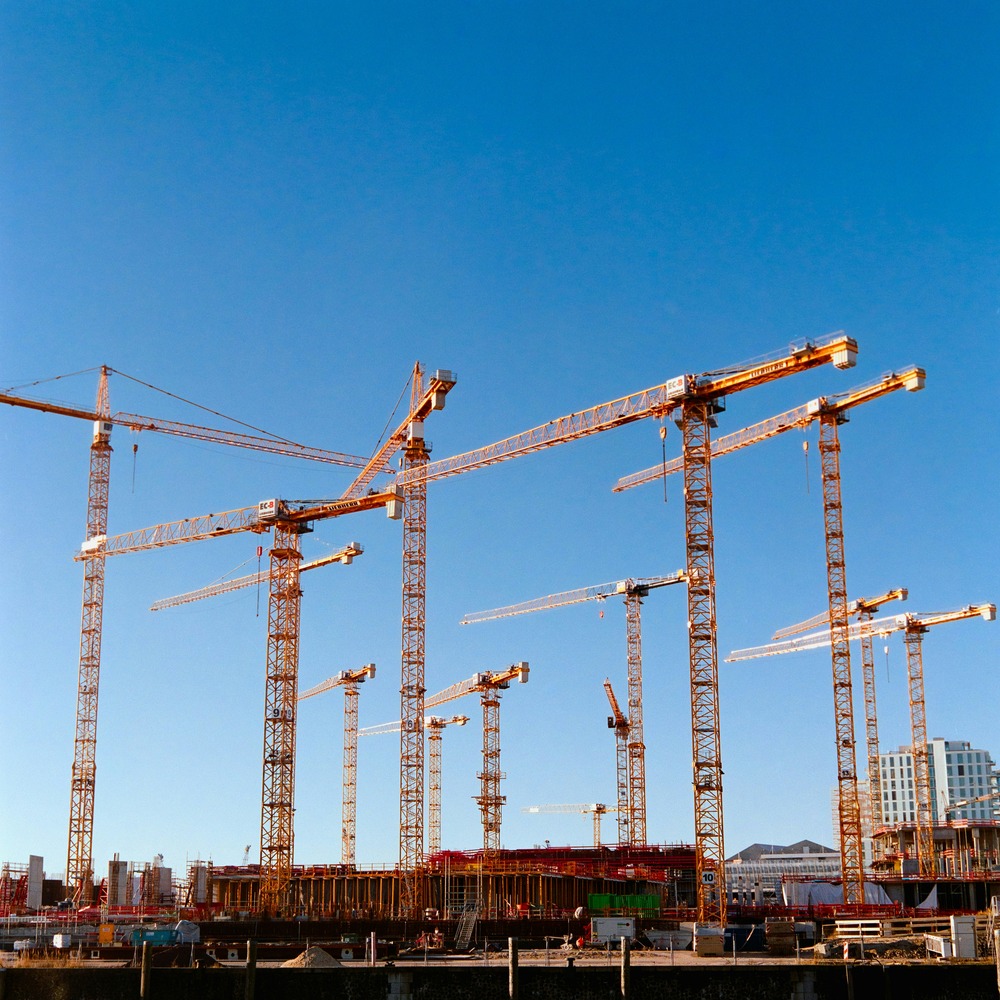
Photo by Pablo Heimplatz on Unsplash
No matter how advanced AI becomes, construction projects at this stage still require substantial human labor. International contractors may bring in world-class technology, design teams, and project management capabilities, but they are usually far less familiar with how local labor should be deployed, hired, and terminated on the ground. They therefore often delegate these matters directly to local “HR consulting firms.” This is one of the most easily overlooked aspects of entering the Taiwan market, and one where, if mistakes are made, the resulting loss can be measured directly in hundreds of millions of New Taiwan dollars.
The “Safest” Advice, Given at Someone Else’s Expense
Local HR consulting firms often give international companies what appears to be the “safest” advice under Taiwan labor law. But “safest” is not the same as “best,” and it is certainly not the same as “correct.” A common pattern is to be generous at someone else’s expense: advise the international client to adopt the most employee-favorable labor policy across the board in order to avoid disputes.
For a white-collar business with a small headcount, this may cost a little more, but the extra cost may still be worth the peace of mind. Apply the same thinking to a large construction project, however, and the calculation changes completely. Once preferential treatment for a single worker is multiplied across the workforce, the result can be losses measured in hundreds of millions of New Taiwan dollars.
We have seen this firsthand. An international contractor hired a large local workforce and adopted a practice of renewing fixed-term employment contracts on an annual basis. As the project approached completion, the need to ramp down manpower gradually emerged, and the contractor began not renewing some workers’ contracts. The workers intuitively asked for severance pay.
The HR consulting firm also went along with that view and answered: “Yes, under Taiwan labor law, severance pay is required when workers are laid off.” It sounded reasonable. The international contractor followed the advice and paid severance to several workers, until our team was consulted and became involved.
Fixed-Term and Indefinite Employment Contracts: The Design of Article 9 of the Labor Standards Act
In Taiwan, employment contracts are divided into “fixed-term contracts” and “indefinite employment contracts.” Where a fixed-term contract is terminated early, or where an indefinite employment contract is terminated, the employer is generally required to pay severance. In the context of large-scale construction projects, international contractors usually understand that they should enter into fixed-term contracts with workers. After all, no construction project is meant to last forever. Yet as the project continues, and delays arise, as they often do in construction, the employer may repeatedly renew fixed-term contracts with the same workers, or may even forget to execute a new contract while allowing the workers to continue performing the work.
The issue is this: when the term of a fixed-term contract is about to expire, and the employer indicates that it will not renew the contract, workers often ask: under Paragraph 2, Article 9 of the Labor Standards Act, “[i]n any one of the following situations, a fixed term contract shall be deemed as to be a non-fixed term upon the expiration of the contract: 1. Where an employer raises no immediate objection when a worker continues his/her work. 2. Where, despite the execution of a new contract, the prior contract and the new one together cover a period of more than ninety days and the period of time between expiration of the prior contract and execution of the new one does not exceed thirty days.” Shouldn’t this originally fixed-term contract therefore be treated as having become an indefinite employment contract? And if so, shouldn’t severance be payable upon termination?
At first glance, this intuition is understandable. Having “worked for a long time” and “renewed the contract many times” may appear to suggest “continuous work,” and therefore an “indefinite employment contract.” But this intuition does not fully align with the legislative design of Article 9 of the Labor Standards Act.
The Overlooked Paragraph 3 of Article 9 of the Labor Standards Act
Article 9 of the Labor Standards Act contains a provision that is often overlooked: Paragraph 3 provides that “[t]he preceding Paragraph shall not apply in the case of a fixed term contract for specific or seasonal work.” In other words, work of a specific or seasonal nature is excluded from the rule under the preceding paragraph that would otherwise deem a fixed-term contract to be a non-fixed term contract. Even if the contract has been renewed many times, and even if the total period of employment has lasted for several years, as long as the nature of the work is indeed “work of a specific nature,” the fixed-term nature of the contract will not change.
The key question, then, is this: what qualifies as “specific work”?
Subparagraph 4, Article 6 of the Enforcement Rules of the Labor Standards Act provides only a simple definition: “[s]pecific work shall mean work of non-continuous nature which can be completed within a specific period. But if the length of work is to exceed one year, it should be reported to the competent authority for approval and record.” Court practice has further explained that specific work is conceptually distinct from short-term work. It refers to work that takes a relatively long period of time to complete, with construction projects such as dams, power plants, metro systems, and highways given as examples. After an enterprise wins a bid for this type of project, it must hire a large number of workers in order to complete the project. Once the project is completed, the additional workers or workers with special skills originally hired for that project no longer have a work target to perform, and there is therefore no need to continue employing them. This is what is meant by specific work.
Put differently, the core feature of specific work is that the work itself has an endpoint capable of completion. A dam will eventually be completed. A power plant will eventually be built. A metro system or highway, even if delayed for some reason, will eventually open to traffic. Once the project is completed, the work target no longer exists. This is fundamentally different from the ordinary, ongoing economic activities that an employer intends to operate on a continuous basis. In determining whether an employment contract is for specific work, the focus should be on the nature of the work to be performed under that contract: whether the contract was entered into for a specific project, tender, or task, and whether the original work target ceases to exist once that specific matter is completed.
In addition to the nature of the work target itself, Taiwan courts also often look at objective circumstances that help show whether the employment contract bears the characteristics of specific work. For example, did the contract specify the project? Was the work content related to a specific construction project? These circumstances help the court assess the objective nature of the work, and may also shape the court’s practical impression of the case. After all, if the worker knew from the outset that he or she was hired for a specific project, what exactly is there to dispute?
Three Common Challenges, and How the Courts Have Responded
In similar construction-related employment disputes in which we have been involved, workers have often pointed to three circumstances: the contracts had been renewed many times, the project had not been fully completed, and the employment period exceeded one year without approval and record by the competent authority. Are these circumstances enough to overturn the fixed-term nature of the contract and convert it into an indefinite employment contract?
In the series of judgments in which we were involved, the courts gave clear answers to each of these points.
Challenge 1: The contract has been renewed several times. Shouldn’t it be treated as an indefinite employment contract?
The courts have responded as follows: even if a worker has worked on the same project for many years and the contract has been renewed many times, renewal itself does not change the fixed-term nature of the contract, so long as each contract was entered into for that project and for the specific work required by that project. In these judgments, the courts have also expressly stated that “even if the contract term has expired and the parties have entered into a new contract without any gap between the two contracts, the contract will not be deemed an indefinite employment contract on that basis alone.”
The courts’ reasoning is that Paragraph 3, Article 9 of the Labor Standards Act expressly excludes fixed-term contracts for specific or seasonal work from the rule under Paragraph 2 of the same article that would otherwise deem a fixed-term contract to be a non-fixed term contract. Accordingly, the number of renewals is not the key factor in determining whether the contract remains fixed-term.
Challenge 2: If the project has not been fully completed, doesn’t the work remain continuous? Can the employer lawfully decline to renew the contract?
The courts have responded as follows: since the project undertaken by the contractor was a large-scale infrastructure project with a definite endpoint, it was clearly different from work carried out for the purpose of an employer’s ordinary, ongoing business. The fact that the main works of the project had also recently been completed and put into operation further supported the conclusion that the work agreed under the contracts existed to meet the special needs of that project. The work therefore constituted specific work under Subparagraph 4, Article 6 of the Enforcement Rules of the Labor Standards Act.
This shows that even if the project has not been fully completed in every respect, that does not necessarily affect the characterization of the work as specific work. Large-scale construction projects naturally proceed in phases. As the project nears completion, the manpower required may change from phase to phase. Workers hired for a specific project may, as different phases conclude, be gradually reduced or no longer retained. The expiration date of a fixed-term contract is, by design, not required to coincide with the date of the project’s overall completion.
Challenge 3: The specific work lasted more than one year without approval and record by the competent authority. Doesn’t that make the contract indefinite?
Subparagraph 4, Article 6 of the Enforcement Rules of the Labor Standards Act provides that, for specific work, “if the length of work is to exceed one year, it should be reported to the competent authority for approval and record.” Many international contractors, when first entering the Taiwan market, fail to notice that fixed-term contracts for specific work may need to be reported to the competent authority for approval and record. This is where they often stumble.
Taiwan courts have relied on the reasoning of the Supreme Court’s 1998 Tai-Shang-Zi No. 2578 Civil Judgment. In that judgment, the Supreme Court reasoned that Paragraph 1, Article 9 of the Labor Standards Act provides that specific work may be covered by fixed-term contracts, while Article 6, Paragraph 2 of the Enforcement Rules as promulgated on February 24, 1985 (corresponding to Subparagraph 4, Article 6 of the current Enforcement Rules) merely provided that specific work lasting more than one year should be reported to the competent authority for approval and record. It did not provide that failure to obtain such approval and record would cause the contract to be deemed a non-fixed term contract.
A number of judgments have also referred to interpretations issued by the former Council of Labor Affairs, Executive Yuan, and held that the requirement of approval and record is merely an administrative review by the competent authority. Whether such approval and record has been obtained has no bearing on the validity of the employment contract, nor does it affect the determination of whether the work is continuous or non-continuous, or whether the contract is fixed-term or non-fixed term.
Accordingly, even if a contract for specific work exceeds one year and has not been reported to the competent authority for approval and record, it will not become a non-fixed term contract on that basis.
Practical Implications for International Contractors
A clear understanding of specific work has direct cost implications for international contractors entering Taiwan to undertake large-scale construction projects. A major infrastructure project can easily involve hundreds, or even thousands, of employees over a period of several years. For international contractors, properly identifying specific work allows them to plan manpower needs in line with project progress, while reducing compliance risks and dispute costs caused by mischaracterizing the nature of the contract. For workers, clarity over the nature of the contract also allows them to understand from the outset the specific task for which they were hired, and what may happen when the contract expires. For this reason, if international contractors intend to enter into fixed-term contracts for specific work with local workers, they should make clear at the contracting stage the work objective, the contract term, and the purpose of employment.
Returning to the scenario at the beginning of this article: when an international contractor follows the advice of an HR consultant to “pay more for peace of mind” and unknowingly pays severance to workers who were not legally entitled to it, the problem has already occurred. What often magnifies the problem is not the law itself, but the information gap between international contractors and Taiwan law. Closing that gap, so that both contracting parties can make proper commercial and risk arrangements, is the main purpose of this series.
We will see you in the next article.

