
Taiwan Construction Disputes (Part 2): When Circumstances Change – How Article 227-2 Reshapes Construction Claims
Author: Eve Y. Tsai, Of Counsel
This article is the second in our Taiwan Construction Disputes series. The first article (“How International Contractors Lose Time and Money”) set out the roadmap of contractor-versus-owner disputes under Taiwan civil law and identified Article 227-2 of the Civil Code as a central tool on the money side. This article takes that thread further and examines how the doctrine actually operates: what it requires, where courts have drawn the line, how awards are quantified, and how contractors should manage events on site to preserve the claim.
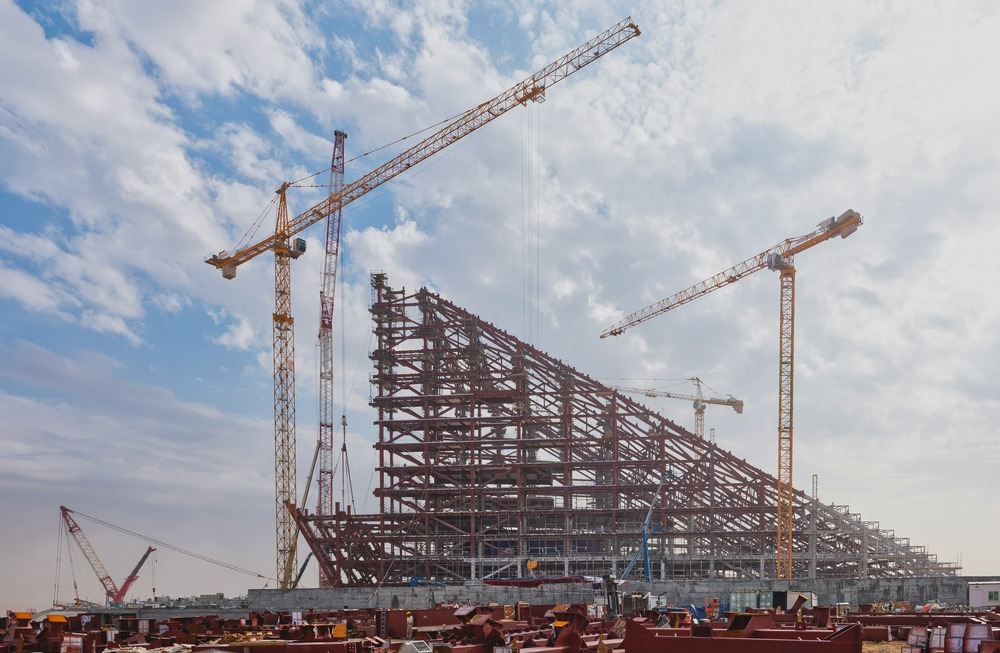
Photo by Nojood Al Aqeel on Unsplash
The World Construction Contracts Did Not Anticipate
Construction contracts, and EPC/Turnkey contracts in particular, are structured to allocate most project risks to the contractor. The contractor takes on design, procurement, and construction risk under a fixed lump sum, and prices those risks into its bid. That allocation works reasonably well where the risks are identifiable at the time of contracting. It works less well over the course of a multi-year project involving dozens of interacting parties, materials and labor sourced from global supply chains, and conditions that no one can fully anticipate at signing.
A contract for the delivery of goods can price in most known risks. A contract to build a semiconductor fabrication plant, a data center, a power plant, or a subsea gas pipeline over three to five years operates in a different world by the time the work is actually performed. That gap between the risk landscape at signing and the risk landscape at completion has always existed in long-term construction projects. Recent years have made it wider. Armed conflict, trade wars, and pandemic are only recent examples of events that have produced consequences few contractors, however experienced, could have priced into a bid at signing. It is precisely that gap that Article 227-2 of the Civil Code, the Doctrine of Change of Circumstances, is designed to address, and it is the subject of this article.
Time Claims and Money Claims: Where Article 227-2 Fits
Understanding where Article 227-2 fits within the broader framework of construction claims matters for strategy. As the first article in this series noted, construction disputes against an owner reduce to two demands: more time and more money. On the time side, a contractor seeking extension of time (EOT) may have a more direct route: Articles 230 and 250 of the Civil Code excuse delay where the cause is not attributable to the contractor, a simpler test that does not require the full Article 227-2 analysis. On the money side, no equivalent shortcut exists. A contractor seeking prolongation costs, price escalation, or other monetary compensation for changed circumstances has no simpler path, and Article 227-2 becomes the central tool. It is therefore on the money side that Article 227-2 tends to matter most in practice, and that is the focus of this article.
One Doctrine, Three Elements
International EPC contractors entering the Taiwan market may be familiar with force majeure provisions as the standard contractual response to disruptive events. Under the FIDIC Silver Book framework, a force majeure event typically entitles the contractor to an extension of time, but in most circumstances not to monetary compensation. For a contractor that has absorbed months of additional site costs, escalating material prices, or disrupted supply chains, an extension of time alone does not restore the economic balance of the contract. Article 227-2 of the Civil Code shares similar underlying concerns but goes further. As a statutory doctrine, it empowers a court or an arbitral tribunal to intervene and adjust the financial terms of the contract itself where enforcing the original terms would be manifestly unfair.
The provision reads: after the formation of the contract, if the circumstance is changed beyond the expectation at the time of the formation of the contract by the parties, and the original effect of the contract is obviously unfair, the party may request the court to increase or decrease the payment or change other original effects. To invoke it, three elements must be satisfied. The first is a change of circumstances after the contract was signed, which must be objective in nature. It may be economic, such as inflation, or rising material or manpower costs, or non-economic, such as a change in law, a war, a change in political or administrative organization, a natural disaster, or the spread of an infectious disease. The second is that the change was beyond the expectation of the parties at the time of contracting. The third is manifest unfairness: continuing under the original terms must produce a result that is obviously and significantly inequitable.
The doctrine does not intervene at the first sign of hardship. It intervenes where the imbalance has become so pronounced that enforcing the original terms would violate basic principles of fairness. All three elements serve the same underlying purpose: that contracts should be honored, but not at the cost of imposing on one party a burden that was beyond what either party could have expected to bear at the time of contracting.
Contracts Said Fixed and Final? Article 227-2 Begs to Differ.
The EPC/Turnkey model is built on one straightforward principle: one contractor, one price, one point of responsibility. That structure finds its contractual expression in the fixed lump sum, which the FIDIC Silver Book enshrines as the default. In Taiwan, large-scale infrastructure projects follow the same logic. Whether the owner is a government agency, a state-owned enterprise, or a major private developer, EPC contracts in this market routinely include language that fixes the contract price and excludes any adjustment.
The question is whether that exclusion of adjustment holds when the disruption that occurred was not one the parties had in mind when they wrote the contract. Taiwan courts have answered consistently: it does not. The prevailing approach treats a contractual exclusion of Article 227-2 as effective only within the range of circumstances the parties could reasonably have expected at signing. Where the disruption falls outside that range, the court retains authority to conduct the full three-element analysis and determine whether Article 227-2 applies, regardless of the contractual language. The fixed lump sum in the contract is not the final word.
Where Courts Draw the Line
The cases where Article 227-2 succeeds are as instructive as the cases where it fails. In one illustrative case, a contractor sought price adjustment after reinforcing steel prices rose by over 21% in 2003 and over 44% in 2004, with metal objects rising by over 18% and over 37% respectively over the same period. The court found that these increases had reached an abnormal level that neither party expected at signing, and that enforcing the original contract price would produce an obviously unfair result. The contractor’s claim succeeded. The same judgment confirmed that a contractual clause purporting to exclude price adjustment does not preclude the court from applying Article 227-2, because the doctrine exists precisely to address what the parties did not expect when they wrote the contract.
A more recent decision cuts the other way. A contractor sought additional payment for cost increases caused by the Covid-19 pandemic and the Russia-Ukraine war. The court rejected the claim on two main grounds. First, the pandemic had already begun and had already caused significant disruption before the contract was signed. The contractor had reduced its price three times during the bidding process to win the contract. A party that signs knowing the risk exists, and cuts its price to secure the business, cannot later claim that the risk was unexpected. Second, a significant portion of the contractor’s purchase orders were placed after the originally agreed completion date. The court found this pattern difficult to reconcile with a genuine claim of unexpected hardship, and declined to allow the contractor to transfer to the owner a risk that the contractor’s own procurement decisions had created.
The takeaway from both cases is the same: whether Article 227-2 applies turns on whether the three elements can genuinely be satisfied on the facts. Where the circumstance existed before signing, the contractor’s pricing reflected an acceptance of that risk, and procurement failures compounded the problem, the doctrine does not provide a remedy. Article 227-2 protects contractors who encountered disruption that was genuinely beyond what any bid could have anticipated and absorbed. It does not protect contractors against the consequences of their own commercial decisions.
From Claim to Calculation: How Courts Quantify the Award
Satisfying the three elements of Article 227-2 does not mean full compensation follows. Taiwan courts approach the remedy as an exercise in equitable adjustment rather than full indemnification. In practice, the additional cost has frequently been divided equally between the parties. The underlying logic is that a disruption neither party caused, and neither party could have expected, should not fall entirely on one side.
On the calculation side, two approaches are available for price escalation claims. The index method is more straightforward and widely referenced, but the recovery it yields may not fully capture the contractor’s actual loss. The total cost method may yield a higher recovery, though it demands more in terms of evidence and documentation. The index method works by reference to published construction cost indices, and may operate at three levels: the general index, mid-category indices, and individual item indices, with adjustment thresholds of 2.5%, 5%, and 10% respectively, as the parties may specify in the contract. The total cost method takes a different starting point, measuring the gap between what the project actually cost at completion and what the contractor had originally assumed at bidding.
For prolongation cost claims, courts have applied either the proportional method, which calculates additional management costs as a proportion of the original contract sum relative to the extended period, or the actual cost method, which requires the contractor to document and establish each item of additional expenditure incurred during the delay. The choice between the two depends on the circumstances of the case and the evidence available.
The Clock Inside the Claim: Limitation Periods Under Article 227-2
A contractor that has successfully established the elements of Article 227-2 still faces one further question that is easy to overlook and consequential to get wrong: how long does it have to bring the claim? Article 227-2 is silent on limitation periods, and early courts concluded that none applied. Taiwan’s Supreme Court has since held otherwise: the applicable period is determined by analogy to the rules governing the type of claim at issue.
For price escalation claims grounded in Article 227-2, courts apply by analogy the two-year period under Article 127, subsection 7, which governs claims for remuneration arising from contracts for work. The start date is not uniform across cases, with Supreme Court decisions variously pointing to completion of testing and acceptance or completion of construction, but the consistent thread is that the period begins on the earliest date on which the claim can be calculated and exercised. In practice, that means no earlier than the point at which the quantities of materials used can be confirmed and the cost differential established.
For prolongation cost claims grounded in Article 227-2, which may be categorized as remuneration in nature and thus subject to the same two-year period by analogy, a rare court decision has applied a stricter standard and treated them as subject to a one-year period instead, with the period running from the date the contractor reports completion to the owner, which typically falls several months before testing and acceptance. Even on the strictest reading, the period does not begin while the project is ongoing, because the earliest date on which the claim can be calculated and exercised has not yet arrived.
The Strategy Starts Before the Dispute
The practical value of Article 227-2 depends on how a contractor manages events during the project, not on how it argues afterward. Two practices may be worth building into the project from the start. The first is characterization. When a disruptive event occurs, the safer posture is to characterize it as unexpected within the meaning of Article 227-2, rather than invoking force majeure, which in Taiwan public infrastructure contracts typically excludes monetary compensation. The second is documentation. Article 227-2 claims require contemporaneous evidence of the changed circumstances. In practice, this means maintaining event-specific site records that capture the nature of each disruption, its timing, and its effect on the works. Cost impact should be recorded as it is incurred. Evidence reconstructed after the fact carries significantly less weight in litigation or arbitration than records built in real time.
Article 227-2 Is a Tool, Not a Safety Net
Article 227-2 does not rescue contractors who failed to anticipate what was reasonably anticipatable, or who priced aggressively and then looked for a legal exit when the numbers turned. What it does is provide a genuine legal pathway for contractors who encounter disruption that no reasonable bid could have absorbed. Understanding the difference between those two situations is the beginning of using the provision well. The next article in this series examines the implied change order doctrine, and the legal pathway it opens for contractors who were forced to accelerate without an explicit change order ever being issued.

