
Taiwan Construction Disputes: How International Contractors Lose Time and Money
Author: Derek T.C. Sun, Managing Partner
The Island in the Spotlight
Taiwan has spent the last two decades in the shadow of cross-strait politics, often described abroad as a small island under pressure. The AI moment has changed the conversation. International attention is now focused not only on the chips Taiwan produces, but on the engineering talent that produces them, and on the physical facilities that house both. Nvidia’s decision to build its first overseas headquarters in Taipei, a roughly 3.89-hectare campus in the Beitou-Shilin Technology Park named Nvidia Constellation, with groundbreaking scheduled for mid-2026, captured that shift in a single announcement.
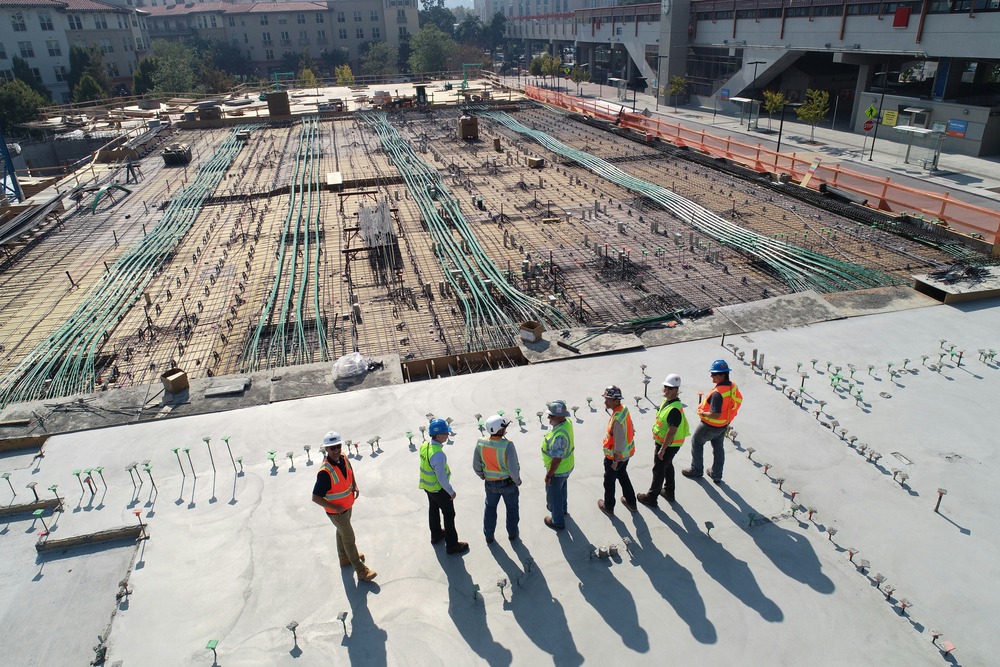
Photo by Scott Blake on Unsplash
Jensen Huang framed the broader implication at Davos in January 2026, calling the AI build-out the largest infrastructure construction in human history and predicting a sustained boom in demand for electricians, plumbers, steelworkers, and construction trades. The virtual world that AI promises has to be built somewhere, by someone. For Taiwan, that means a meaningful pipeline of advanced fabs, AI data centers, corporate campuses, and supporting infrastructure over the coming years. International EPC contractors and engineering consultants are an increasingly likely part of that picture, and many will be entering the Taiwan market for the first time.
ICC Arbitration, Taiwan Law: The Real Operating Environment
For those entering, the conventional reference points are familiar: FIDIC-style contracts, common law construction jurisprudence, and ICC arbitration. The reality of large public infrastructure procurement in Taiwan is somewhat different. Owners are typically state-owned or quasi-public entities such as Taipower, CPC Corporation, China Steel, the High Speed Rail Corporation, the metro authorities, or the Water Resources Agency. These owners hold significant bargaining power, and even where they accept ICC arbitration as the dispute resolution forum, they almost invariably require Taiwan law as the governing law of the contract. Understanding the particular features of Taiwan civil law in the construction context is therefore not optional. It is the operating environment.
Two Demands, Always: Time and Money
This article is the first in a series written for international contractors and consultants approaching the Taiwan market. The series takes the contractor’s perspective and builds outward from the most practical reality of every construction project, which is that disputes against the owner reduce, almost without exception, to two demands. The contractor wants more time to complete the work, and the contractor wants more money. Each subsequent article in the series will go deeper into a specific area. This first piece sets out the roadmap.
The two demands are conceptually distinct, but they are intertwined in practice. A contractor that obtains an extension of time has not yet obtained the money that usually comes with it: the site office still has to be staffed during the prolonged period, equipment leases continue, supervisory personnel remain on payroll, and a range of time-related costs commonly grouped together as prolongation cost continue to accrue. Inexperienced contractor counsel often focus on the time claim and lose sight of the parallel money claim, or the reverse. Both have independent legal bases, independent evidentiary requirements, and independent limitation periods. Both must be built deliberately and in parallel.
Three Roads to More Time
On the time side, in the absence of special contractual provisions, Taiwan civil law gives the contractor three pathways to seek extension of time. The first is Article 227-2 of the Civil Code, the doctrine of change of circumstances, which applies where an event was unforeseeable by the parties at the time of contract execution. Pandemics, sudden regulatory changes such as the recent shifts in migrant worker quota formulas, and severe price escalation are typical examples. The second pathway runs through Articles 230 and 250, which excuse the contractor from delay liability where the cause of delay is not attributable to the contractor. This second pathway is structurally a defense rather than an affirmative claim. The contractor invokes it when the owner asserts liquidated damages or other delay liability, and the distinction between defense and claim becomes important when limitation periods are analyzed. The third pathway is the contract itself, including any change-in-law or owner-risk clauses the contract may contain.
Don’t Walk Into the Force Majeure Trap
A common strategic blind spot at the time-claim stage is the reflexive characterization of a delay event as force majeure. Force majeure clauses in Taiwan infrastructure contracts vary in scope, but they frequently limit, and sometimes exclude, monetary compensation for the affected party. The contractor should therefore read the specific clause carefully before invoking it. A contractor that lets an event be labeled as force majeure without first checking what that label costs may have surrendered the money side of its claim before the analysis even begins. The safer posture is to characterize the same event as unforeseeable within the meaning of Article 227-2, which preserves the foundation for both extension of time and the associated monetary claims. The legal grounds in Articles 227-2, 230, and 250 are typically the contractor’s most reliable reference, with the force majeure clause invoked, if at all, only after its monetary consequences are well understood.
The methodology for calculating extension of time falls into two broad categories. Where the cause has a project-wide impact on productivity, such as a pandemic or a labor shortage caused by regulatory change, the calculation is typically done on a proportional basis using a productivity-loss model. Where the cause is event-specific, such as a typhoon, an earthquake, a fishing-season interruption, or a delayed handover by the owner, the analysis runs through critical path examination to confirm that the event actually delayed the critical work and to avoid double counting. The two categories can be combined, and they can interact in ways that make the underlying calculation more delicate than it first appears. The mechanics of those calculations deserve their own treatment and will be addressed in a later article.
Price Claims and Damage Claims: Two Categories, Two Clocks
On the money side, monetary claims divide into two categories that are easy to confuse and consequential to confuse: price claims, which seek payment under or in adjustment of the contract, and damage claims, which seek compensation for the owner’s breach. The legal bases differ, the evidentiary focus differs, and most importantly the limitation periods differ. Price claims include normal contract payments, prolongation cost grounded in Article 227-2, additional compensation under written change orders, and acceleration cost based on the implied change order doctrine together with Article 491 of the Civil Code. They also include adjustments to the contract price for sharply rising labor wages and material prices, again grounded in Article 227-2.
The Change Order You Skipped, and the Acceleration You Were Never Told About
Two points within the price-claim category warrant particular attention here, with detailed treatment reserved for later articles. The first is the change order. Most contracts contain a familiar change order clause, but contractors frequently fail to follow the procedural steps the clause requires, which typically include written quotation, confirmation of schedule impact, and the owner’s written instruction before work proceeds. Skipping those steps in the interest of keeping the project moving makes later recovery very difficult.
The second is the implied change order claim, also known internationally as constructive acceleration, which is poorly understood even by Taiwan lawyers without construction experience. The typical scenario is one of the most demoralizing for contractors. The contractor has a legitimate basis for extension of time, the owner refuses to grant it, and the owner insists that the contractor complete the work by the original date. The implicit logic of that demand is that the contractor must accelerate, even though the owner refuses to label it as such. Taiwan law allows the contractor to treat that unreasonable insistence as an implied change order and to recover the additional cost of accelerated performance under Article 491. Contractors absorbing overtime and additional equipment costs in this scenario are not without recourse. They have a legal pathway to claim back the money, and they should know it exists.
Lump Sum, Firm and Fixed: Not Always What It Looks Like
Article 227-2 has a further feature that international contractors should not overlook. Even where the contract expressly states that the price is lump sum, firm and fixed, and not subject to any adjustment, Taiwan courts have repeatedly held that Article 227-2 still applies if its elements are satisfied. The reasoning is internally consistent. Article 227-2 addresses circumstances the parties did not foresee at the time of contracting. A war that drives energy or shipping costs sharply higher, or a change in migrant worker policy that produces an acute labor shortage, would be paradigmatic examples. If the parties did not foresee the circumstance, they could not meaningfully have excluded it. A contractual provision purporting to exclude Article 227-2 in advance is, on this view, attempting to exclude something that was not within the parties’ contemplation, which is a logical impossibility. For international readers accustomed to strict textual enforcement of price-fixing clauses, this is a genuine peculiarity of Taiwan law and a meaningful protection for contractors. The methods used to quantify these adjustments, including the price index method and the total cost method, have their own practical complexities and will be the subject of a separate article.
What the Contract Didn’t Say the Owner Still Had to Do
Damage claims are organized around three categories of owner conduct. The first is improper instruction by the owner, addressed by Article 509. The second is breach of an express contractual obligation, addressed by Articles 227 and 231, with a typical example being the owner’s failure to hand over the site or supply utilities by a specified date. The third, and the one most often overlooked, is breach of an implied contractual obligation, sometimes described as a collateral or cooperation obligation, also addressed under Article 227. Taiwan courts have developed the implied-obligation doctrine to capture owner conduct that, while not violating any specific clause, frustrates the contractor’s ability to perform. For an international contractor whose contract negotiation team did not anticipate every owner-side obligation, this doctrine is a quiet but important tool. What the contract did not require the owner to do does not necessarily mean the owner had no obligation to do it. The concurrent delay scenario, where both sides contribute to the delay, is the most complex variant of the damage-claim analysis and is treated separately later in the series.
One Year. Mandatory. No Contracting Around It.
The most important warning in this entire roadmap is about timing, and it is the warning international contractors are least prepared for. Taiwan’s statutes of limitation for construction-related claims are unusually short, and they are mandatory rules of substantive law that contracting parties cannot lengthen by agreement. The exposure is asymmetric across time and money claims, and the asymmetry is not in the contractor’s favour.
Extension of time raises few limitation issues during construction itself: the doctrinally stricter two-year period under Article 227-2 does not begin to run before completion of the works, and the defensive grounds in Articles 230 and 250 are exercised only when the owner asserts delay liability. The acute limitation problem in Taiwan construction disputes lies on the money side.
Price claims are subject to a two-year limitation period under Article 127, subsection 7, generally running from completion of testing and acceptance. Damage claims for contractors are subject to a one-year limitation period under Article 514, paragraph 2, running from the occurrence of the cause of damage, with judicial practice on the precise starting point not entirely uniform. One year is short by any standard, and it is particularly short relative to the duration of the projects in which these claims arise.
The mandatory nature of these periods is the second half of the trap. In several common law jurisdictions, parties retain meaningful flexibility around statutory limitation periods, whether through tolling or standstill agreements that suspend the running of time, or by treating the limitation defence as one the defendant may waive. Under Taiwan law none of those routes is available. An English-language contract, an ICC arbitration clause, and the most carefully drafted dispute resolution provisions do not change the result if Taiwan law governs the substance. The statute of limitations applies as written, regardless of what the parties may have intended.
The pattern that follows from this is one we see repeatedly. A construction project runs for two or three years. The contractor experiences a series of legitimate grievances, but chooses not to escalate them in order to preserve the working relationship with the owner. The contractor decides, reasonably enough on its own terms, to bundle everything together at the end and resolve it at final settlement. By the time the project is complete, a meaningful portion of the damage claims has already lapsed. The contractor that intended to swallow it temporarily ends up having been silent, and the silence is what costs it the claim.
Every Trigger Event Starts a Clock
In Taiwan construction disputes, the contractor’s most expensive mistake is rarely about the merits. It is about timing. The substantive law is often more favorable to contractors than international counterparts assume, particularly through Article 227-2 and the implied change order doctrine. What contractors lose, they generally lose by allowing the limitation clock to run while they wait for a better moment to raise the issue. International EPC contractors entering the Taiwan market should approach every triggering event during construction as the start of a clock, not as a matter to be deferred. The subsequent articles in this series will develop each piece of this roadmap in detail, beginning with the methodology of EOT calculation, the procedural discipline required for change orders, the operation of the implied change order claim, the scope and limits of Article 227-2 trumping fixed-price clauses, the practical workings of price escalation methods, the limitation traps in damage claims, and the strategy of the contractor in concurrent delay.
The Real Winners in the Blue Ocean
Taiwan’s rapidly growing construction market needs international contractors to bring higher-quality work to the table. Those who do the commercial and legal preparation in advance are typically the ones who come out as the real winners in this blue ocean. We will see you in the next article in the series.

